

Nairobi (Lamaane.net) - Kenya's Ministry of Agriculture and Livestock Development launched the Kenya AgriConnect Compact on Wednesday, June 17, in Nairobi, unveiling an 11.4-billion-U.S. dollar agricultural transformation programme aimed at modernising the sector, expanding employment, and boosting investment across the value chain.
The initiative, running 2025–2030, seeks to generate more than 2.4 million new and upgraded jobs by the end of the decade. Cabinet Secretary Mutahi Kagwe said the plan will combine 3.8 billion dollars in public financing with 7.6 billion dollars in private investment to reduce risk in agriculture, expand infrastructure, and attract large-scale capital into farming and agribusiness.
"We are redefining agriculture as a modern, tech-driven, climate-smart and investment-ready driver of inclusive economic growth, rather than a subsistence-based sector,” Kagwe told.
He added that the framework is designed to align public investment with private sector participation, with government spending focused on foundational systems and public goods to unlock commercial expansion. Kagwe also outlined targets to cut imports of staple foods such as rice and maize by 50 percent while increasing agricultural exports by 60 percent.
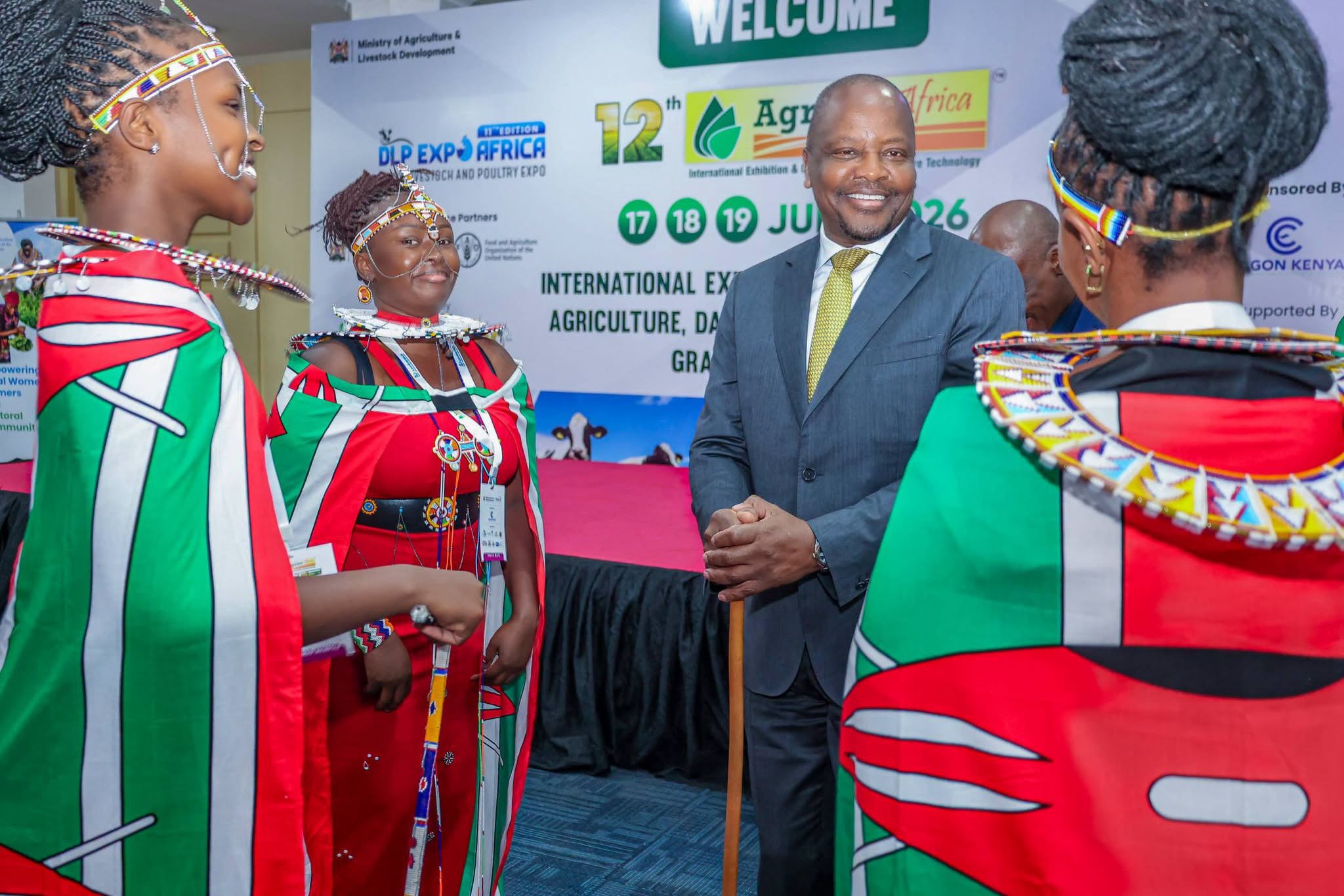
The announcement came alongside agritech-focused events in Nairobi, including the 12th Agritec Africa International Conference and Exhibition, where mechanisation and innovation featured prominently in policy discussions and demonstrations. Kagwe also presided over presentations of new agricultural machinery partnerships, including tractor technologies introduced through regional distribution networks aimed at improving farm-level productivity.
Exhibition halls at the Kenya International Convention Centre recorded steady attendance throughout the day, with farmers, distributors, and investors assessing mechanised equipment displays and digital farming systems. Organisers reported increased participation from international agribusiness firms, reflecting sustained commercial interest in East Africa’s agricultural transformation agenda.
Kenya’s agriculture sector remains a central pillar of the national economy, supporting a significant share of employment while continuing to face structural constraints including productivity gaps, climate variability, and reliance on imported staple foods. Policy interventions in recent years have increasingly focused on mechanisation, irrigation expansion, and value chain integration.
The AgriConnect Compact signals a broader shift toward blended public-private financing models intended to mobilise capital beyond traditional state budgets. The success of the programme will depend on execution capacity, infrastructure readiness, and the extent to which smallholder farmers can access and adopt new technologies across diverse regions of the country.