

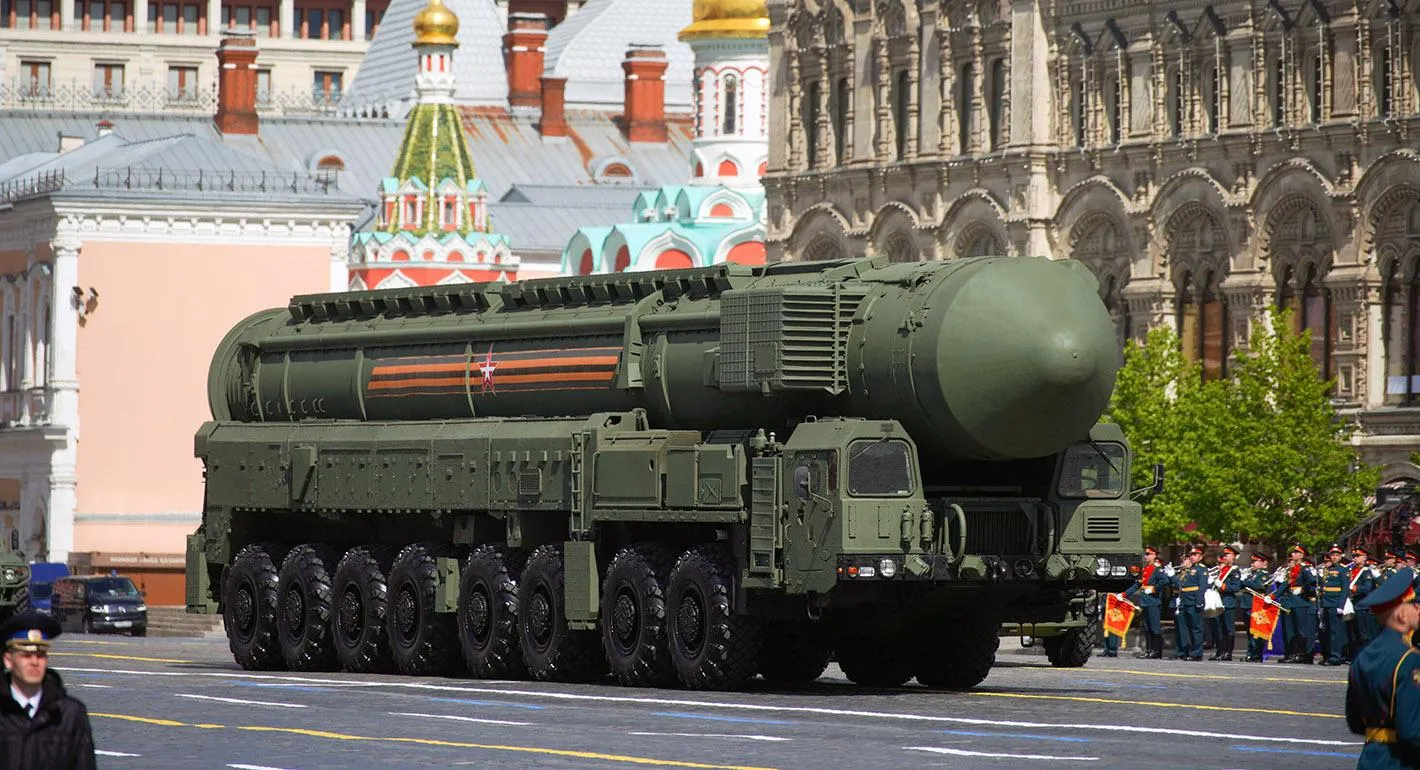
Moscow (Lamaane.net) - Russian President Vladimir Putin announced Tuesday that Russia had successfully tested the Sarmat intercontinental ballistic missile following the expiration of the New START nuclear arms control treaty earlier this year, marking a significant development in Moscow's strategic weapons program.
Putin described the Sarmat missile system as "the most powerful missile system in the world” after receiving a military briefing on the launch, according to remarks broadcast by Russian state media.
He said the missile would enter combat service before the end of the year and claimed it could carry a nuclear payload more than four times stronger than weapons currently deployed by Western militaries.
Russian officials stated that the Sarmat missile, known by North Atlantic Treaty Organization as "Satan II,” is capable of traveling distances of up to 35,000 kilometers and is designed to evade advanced missile defense systems. The missile is Russia’s first "super-heavy” intercontinental ballistic missile developed after the collapse of the Soviet Union.
The test came months after the February expiration of the New START treaty, the last major nuclear arms reduction agreement between Russia and the United States. The treaty, signed in 2010, had imposed limits on deployed strategic nuclear warheads and delivery systems maintained by the world’s two largest nuclear powers.
Military analysts in Moscow said the timing of the launch carried political and strategic significance as tensions between Russia and Western governments remain elevated over security disputes and broader geopolitical competition. A defense analyst interviewed by Lamaane News Network said the Sarmat program reflects Moscow’s effort to modernize its nuclear deterrent amid uncertainty surrounding future arms control negotiations.
"The expiration of New START removed several formal verification and limitation mechanisms that had shaped strategic stability for more than a decade,” said Stanislav Viktor, a Moscow-based political analyst. "Both sides are now signaling military readiness as diplomatic discussions remain limited.”
Despite the treaty’s expiration, Russian and American officials previously agreed to resume high-level military dialogue. No formal negotiations on renewing or extending the accord have been announced publicly.
U.S. President Donald Trump had repeatedly called for a broader nuclear agreement that would also include China, citing Beijing’s expanding nuclear arsenal. Chinese authorities rejected pressure to join such negotiations, arguing that their stockpile remains substantially smaller than those of Russia and the United States.
Observers said the latest missile test is likely to intensify international debate over strategic stability and nuclear modernization programs at a time when several long-standing arms control frameworks face uncertainty.