

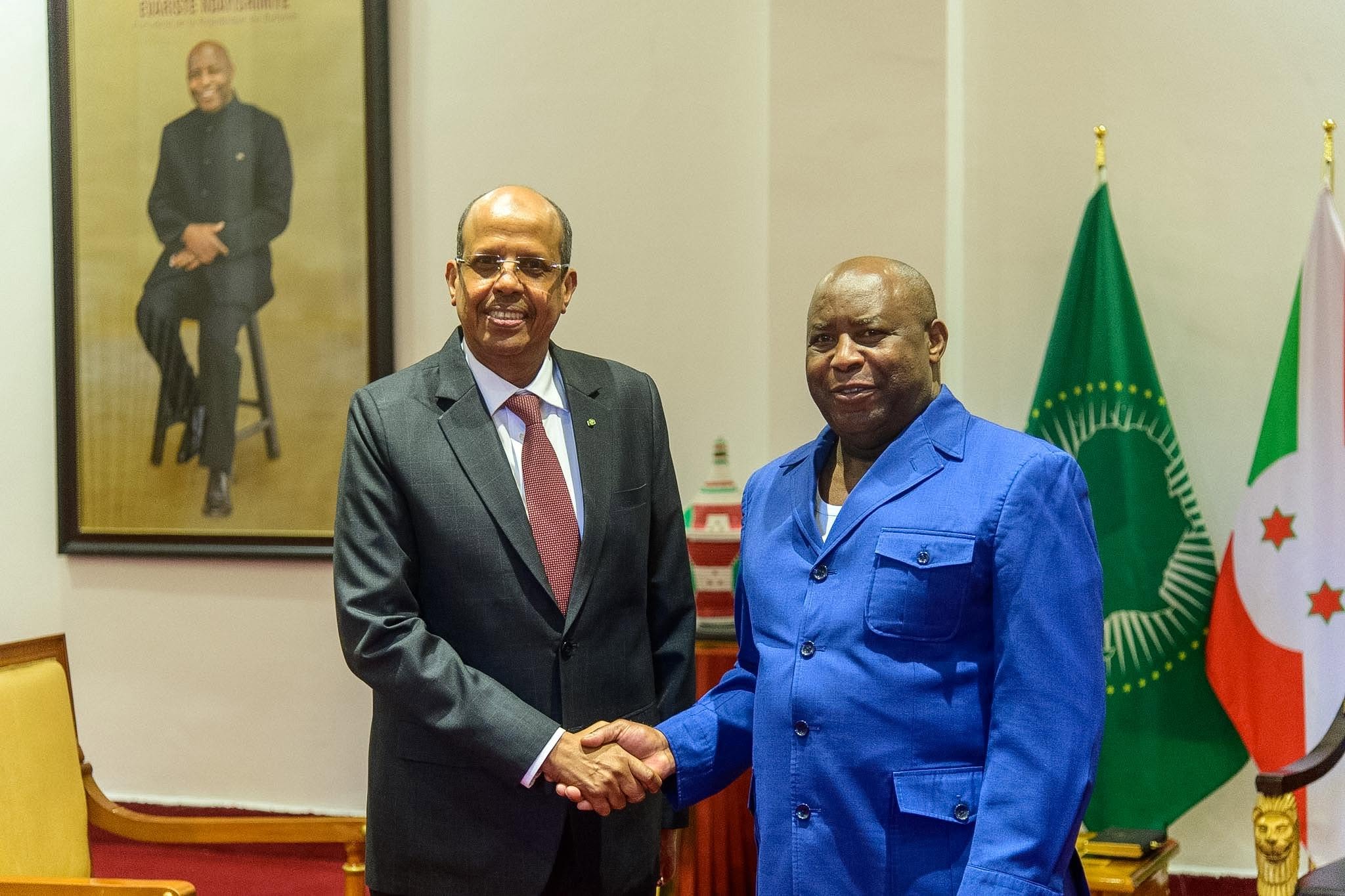
Bujumbura (Lamaane.net) - The African Union Commission Chairperson Mahmoud Ali Youssouf held high-level talks with President Évariste Ndayishimiye of Burundi at the Presidential Palace in Bujumbura, focusing on Ebola response coordination, institutional reform, and ongoing peace and security challenges across the African continent.
Mahmoud Ali Youssouf, Chairperson of the African Union Commission, presented an update on the Ebola situation in affected Member States, drawing on technical assessments from the Africa Centres for Disease Control and Prevention (Africa CDC) and consolidated reporting from national health authorities engaged in containment operations. The discussions formed part of preparations for the forthcoming AU Summit on Ebola to be hosted under Burundi’s leadership.
According to information conveyed during the meeting, the AU Commission Chairperson emphasized the importance of coordinated surveillance systems, rapid response mechanisms, and sustained intergovernmental cooperation. President Évariste Ndayishimiye, in his capacity as Chairperson of the AU Assembly, reaffirmed Burundi’s commitment to strengthening continental preparedness frameworks and supporting collective action against public health emergencies.
Officials familiar with the discussions indicated that Mahmoud Ali Youssouf highlighted the role of Member State solidarity and international partnerships in sustaining outbreak response logistics, including resource mobilization and technical support. A senior AU official present at the talks, speaking in an official capacity, said the Chairperson underscored that "continental coordination remains essential to limiting the spread of Ebola and reinforcing health system resilience across affected regions.”
President Ndayishimiye, according to remarks relayed by Burundian presidential representatives, reaffirmed that Burundi would continue to back AU-led initiatives aimed at improving outbreak readiness and response capacity. A government representative noted that the President stressed "the necessity of shared responsibility among African states in addressing cross-border health threats,” reflecting a broader consensus on regional health security priorities.
The meeting also reviewed the African Union’s institutional reform agenda, which seeks to enhance operational efficiency, streamline decision-making structures, and improve responsiveness across AU organs. Discussions further touched on peace and security developments in Sudan, South Sudan, the eastern Democratic Republic of the Congo, and the Sahel region, where ongoing instability continues to demand sustained diplomatic engagement.
Lamaane News Network observed heightened security coordination around the Presidential Palace, with controlled movement of delegations and formal protocol arrangements reflecting the significance of the meeting. Government staff and AU representatives maintained continuous coordination throughout the engagement, underscoring the procedural importance of the summit preparations.
The Africa CDC continues to play a central role in monitoring epidemiological trends and supporting Member States with technical guidance, laboratory coordination, and emergency response planning. AU officials reiterated that recent engagements aim to strengthen early warning systems and improve preparedness capacity across vulnerable regions.
The Bujumbura talks reflect continued alignment between AU leadership and Member States on public health security, institutional reform, and regional stability priorities. The forthcoming Ebola Summit is expected to further consolidate continental strategies on outbreak response and reinforce cooperation mechanisms among African Union members.