

Abuja (Lamaane.net) – The Nigerian Armed Forces on Friday, 24 April, inaugurated a General Court Martial in Abuja to try 36 serving officers accused of mutiny and plotting to overthrow the government, according to Defence Headquarters.
Major General Samaila Uba, spokesperson for the Defence Headquarters, said in an official statement that the military had constituted the tribunal to ensure due process. "Proceedings of the court will be conducted with the highest standards of fairness,” he stated, without specifying when hearings would formally begin.
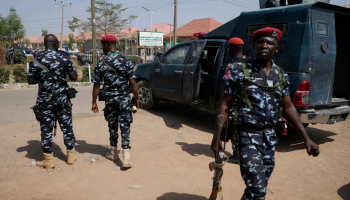
At a secured military facility in Abuja, uniformed personnel escorted the accused officers into the compound early Friday under tight security. Journalists were kept at a distance as the inauguration ceremony was held behind closed doors.
A senior officer present at the site, speaking to Lamaane News Network on condition of attribution, described the atmosphere as "controlled and procedural,” noting limited movement and heightened surveillance around the premises.
Separately, six civilians—including retired major general Mohammed Ibrahim Gana—appeared earlier this week before the Federal High Court in Abuja, where they pleaded not guilty to charges linked to the same alleged plot. Court documents accuse them of conspiring to "levy war against the State” and failing to report plans by Colonel Mohammed Alhassan Ma’aji, identified in prior reports as a key suspect.
A legal analyst, Amina Suleiman, told Lamaane News Network that the parallel proceedings highlight "a coordinated judicial response involving both military and civilian jurisdictions,” adding that such cases are "rare but significant in testing institutional accountability.”
The case marks a notable shift in the government’s position. Authorities initially denied reports of a coup attempt in late 2025 before announcing in January that security forces had disrupted a plan to overthrow the administration of President Bola Tinubu. Defence officials have since framed the arrests as part of internal disciplinary and national security measures.
Nigeria, Africa’s most populous nation, has a history of military interventions in governance, with several coups recorded after independence in 1960. The country returned to civilian rule in 1999 and has maintained democratic governance for over two decades.
Security experts say the ongoing trials could have broader implications for civil-military relations. "The transparency and fairness of these proceedings will be closely watched domestically and internationally,” said Ibrahim Lawal, a governance researcher based in Lagos.
The outcome of the court martial is expected to shape perceptions of stability within Nigeria’s armed forces and reinforce—or challenge—confidence in the country’s democratic institutions.