

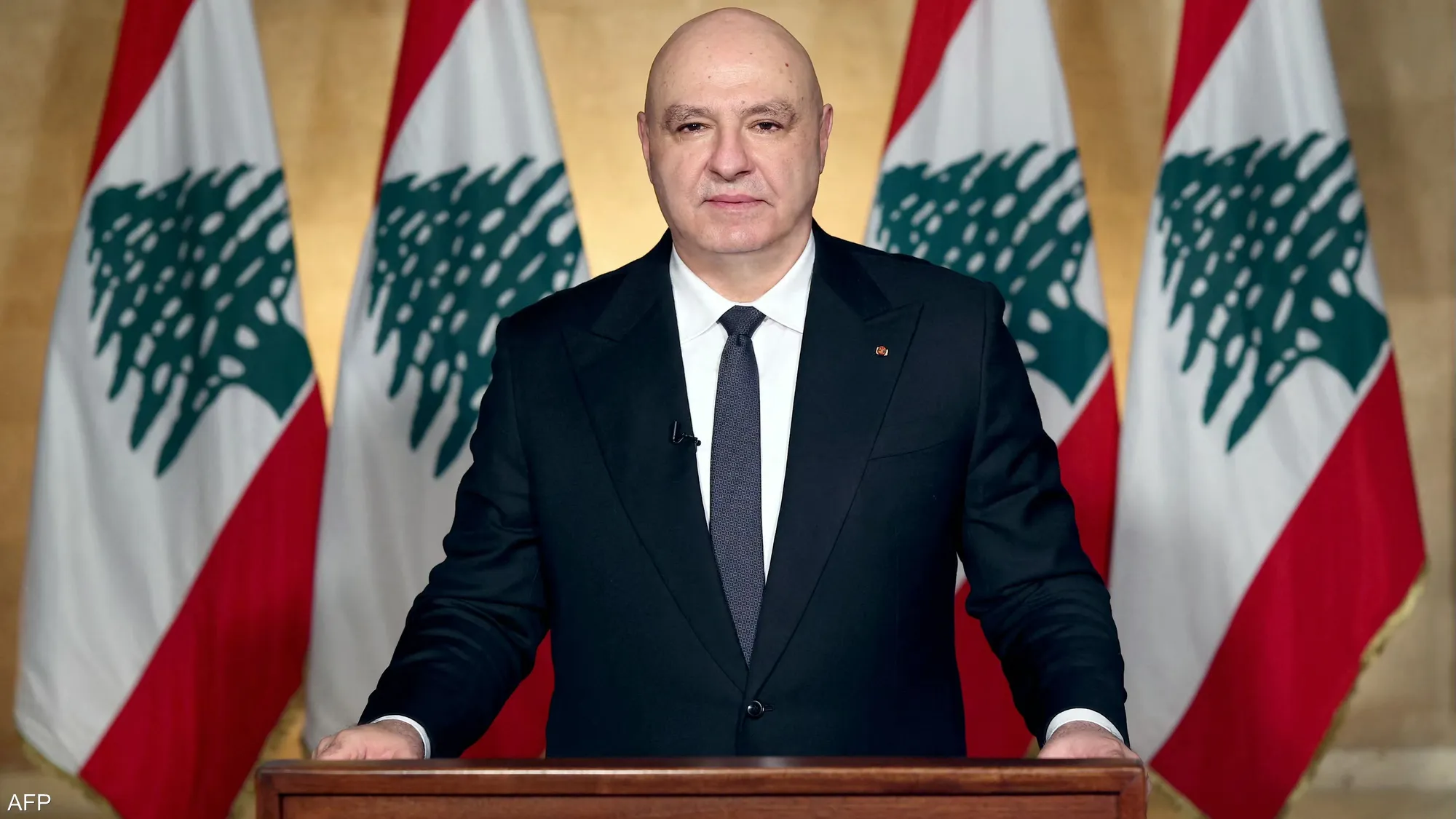
Beirut (Lamaane.net) – Lebanese President Joseph Aoun, on Wednesday, April 22, in Beirut, met members of the parliamentary "Committee for the Protection of Civilian Assets and the Prevention of Systematic Destruction," discussing ongoing diplomatic efforts to extend a ceasefire agreement and stabilize conditions across Lebanon amid continued regional tensions.
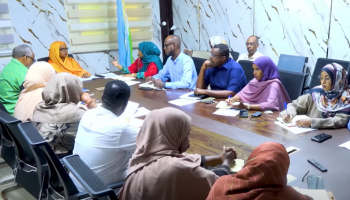
The meeting, held at the presidential palace in Baabda in the southeastern outskirts of Beirut, took place in a formal setting with senior political figures and committee members seated around a large conference table displaying the Lebanese flag. Discussions focused on security developments, civilian protection measures, and diplomatic initiatives aimed at preventing renewed escalation.
President Aoun stated during the meeting that diplomatic contacts remain active and centered on maintaining stability. "I will spare no effort in ending the abnormal conditions Lebanon is currently experiencing,” he said, according to a presidential statement released Wednesday. He emphasized that ongoing diplomatic engagement seeks to preserve Lebanon’s sovereignty over its full territory.
"The upcoming negotiations are based on several pillars, most notably the complete cessation of Israeli attacks, the withdrawal of Israeli forces from Lebanese territory, the return of prisoners, the deployment of the Lebanese army up to the international borders, and the start of reconstruction of what was destroyed during this war,” Aoun said.
Aoun added that international support has created a critical window for diplomacy. "The international backing, particularly from Donald Trump, alongside support from friendly and brotherly countries, has provided an opportunity that must not be wasted because it may not be repeated,” he said.
Committee members present at the meeting expressed concern over the humanitarian situation in southern Lebanon, where infrastructure damage and displacement remain significant. One official described the situation as "fragile and requiring urgent political and humanitarian coordination,” speaking on condition of attribution.
Residents in southern Lebanon continue to report disrupted services and intermittent insecurity. A local community representative said movement in some border villages remains restricted, with families waiting for clearer guarantees before returning. "People want stability more than anything else; they are waiting for real security assurances,” he said.
Diplomatic observers note that the proposed framework under discussion includes ceasefire consolidation, phased military deployment, and reconstruction planning. Diplomatic sources cited by Lamaane News Network indicated that regional and international stakeholders are monitoring the process closely, given its potential impact on broader cross-border stability.
Background context shows that Lebanon has faced repeated cycles of conflict-related disruption along its southern frontier, with ceasefire arrangements often requiring external mediation and sustained international engagement. Reconstruction and displacement challenges have compounded economic pressures already affecting public services and infrastructure nationwide.
Analysts view the current diplomatic initiative as a pivotal moment for Lebanon’s political leadership, particularly amid heightened regional uncertainty. The success of negotiations is seen as dependent on coordinated international guarantees, internal political consensus, and sustained security de-escalation along the border areas.