

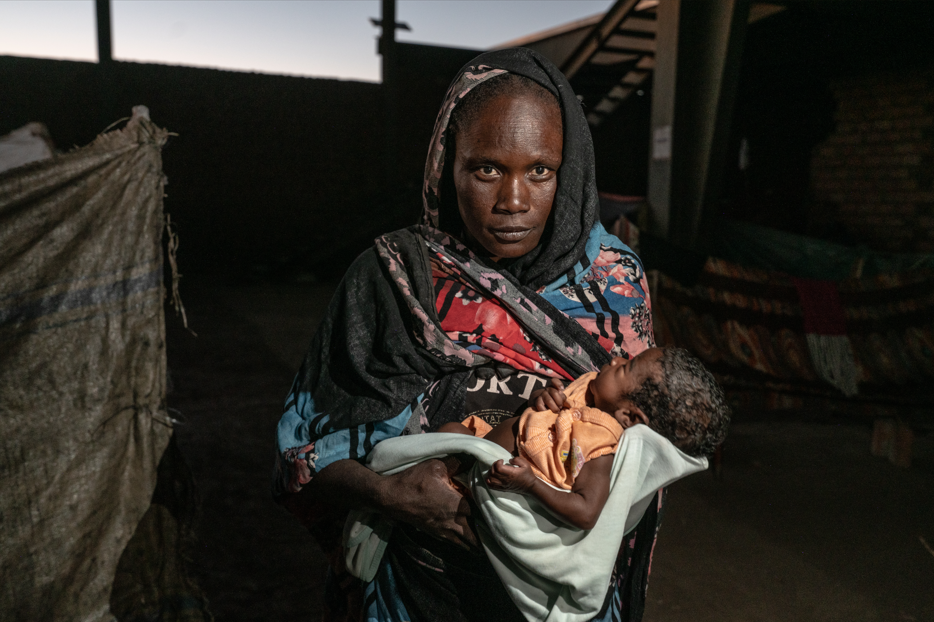
Khartoum (Lamaane.net) – UN Development Programme (UNDP) said on Tuesday, that poverty in Sudan has surged to about 70 percent amid the ongoing war between the national army and Rapid Support Forces (RSF).
The UNDP report, cited by Lamaane News Network, estimates nearly seven million people were pushed into extreme poverty in 2023 alone, while more than 21 million face acute food insecurity across the country.
In comments reported by Lamaane News Network, UNDP Sudan representative Luca Renda said, "Before the war, we were probably looking around 38 percent of people living in poverty, and now we are estimating about 70 percent," referring to estimates based on a $4-a-day poverty threshold.
Renda further warned of the broader consequences of the prolonged conflict, saying, "Three years into this conflict, we are not just facing a crisis — we are witnessing the systematic erosion of a country's future." The remarks came as international donors prepared to meet in Berlin for talks aimed at mobilising humanitarian assistance and reviving stalled peace efforts.
According to the UNDP analysis, Sudan lost an estimated $6.4 billion in GDP in 2023, while more than 11 million people have been displaced since the war began. The report projects that if the conflict continues to 2030, extreme poverty could exceed 60 percent, affecting around 52 million people, with long-term GDP losses reaching $34.5 billion compared with a no-conflict scenario.
The report also outlines a potential recovery pathway if peace is restored and reforms are implemented, projecting stronger growth and poverty reduction under a stabilisation scenario. Analysts note that continued fighting in regions such as Kordofan and Blue Nile state risks further weakening already strained public services, deepening humanitarian needs across Sudan.
The findings come as humanitarian agencies warn that Sudan’s protracted conflict is reshaping the country’s long-term development prospects, with basic services, education systems, and local economies increasingly under strain.
Aid officials argue that without sustained international financing and a political settlement, poverty reduction gains made over previous decades risk being permanently reversed. Regional analysts also caution that instability could spill across borders, affecting trade routes and displacement patterns in the Horn of Africa.
The UNDP assessment underscores mounting pressure on Sudan’s fragile economy as policymakers weigh post-conflict recovery options alongside urgent humanitarian needs.