

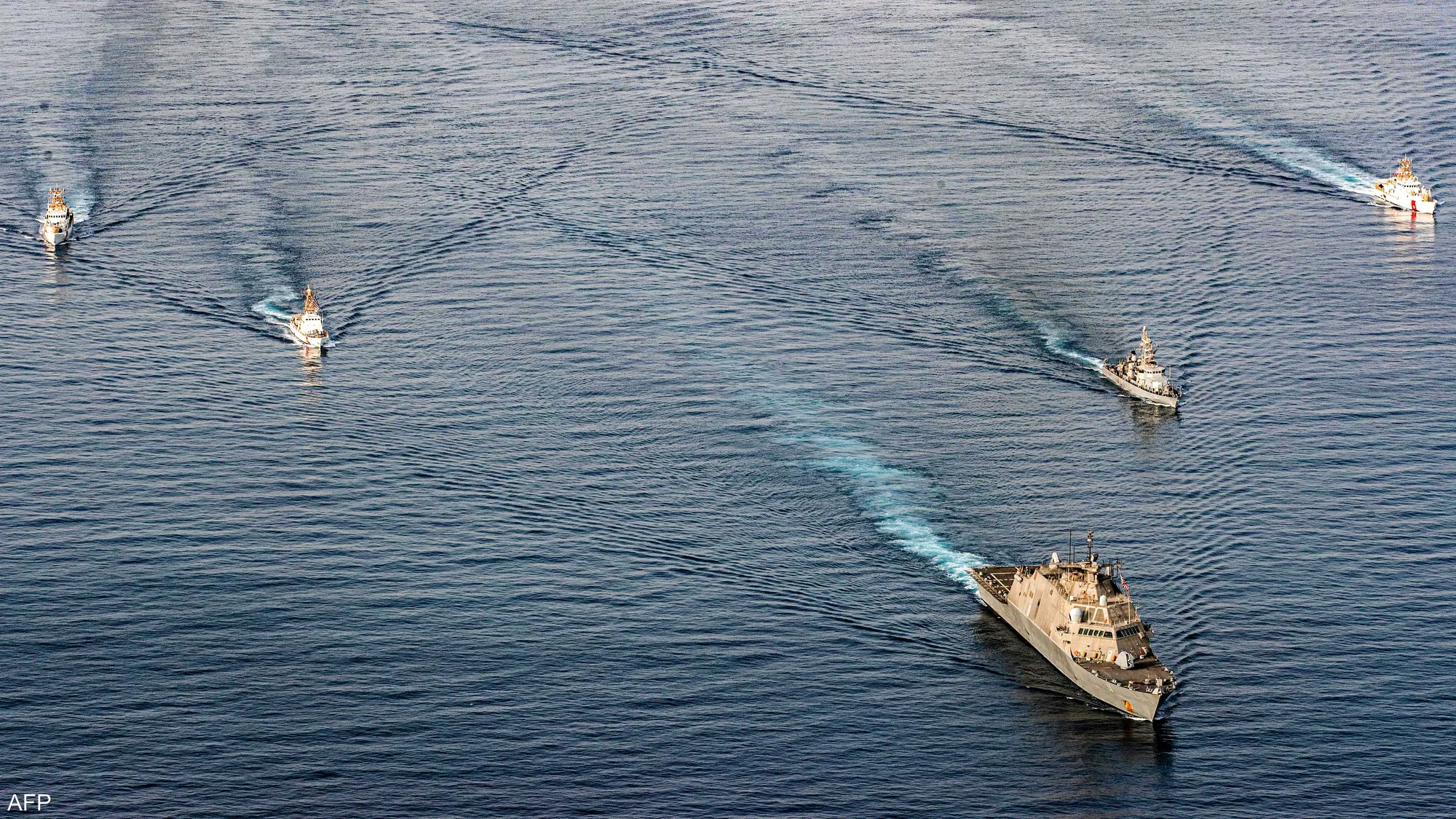
Washington, D.C. (Lamaane.net) – The United States military resumed a comprehensive maritime blockade on vessels traveling to and from Iranian ports and coastal areas on Tuesday, July 15, while conducting additional military strikes against targets inside Iran, marking a renewed escalation in the confrontation centered on the strategic Strait of Hormuz.
The U.S. military announced in an official statement that the blockade resumed at 4:00 p.m. Eastern Time, adding that more than 20 U.S. Navy warships and hundreds of military aircraft were operating across the Middle East. Earlier the same day, U.S. Central Command (CENTCOM) confirmed that American forces were carrying out additional operations against Iranian targets, describing the strikes as efforts to eliminate what officials characterized as emerging security threats.
A U.S. defense official, speaking to Reuters on the record, said the latest strikes targeted military facilities assessed to pose immediate operational risks. Iranian state media simultaneously reported missile attacks on multiple locations, including Qeshm Island in the Strait of Hormuz, without providing details on casualties or the specific facilities affected.
Lamaane News Network spoke with Matthew Andrew, a Middle East security analyst, who said the renewed blockade represents "a significant expansion of military pressure beyond direct strikes, with implications for commercial shipping and regional stability." He noted that maritime restrictions could affect international trade routes if tensions continue to rise.
Iranian state broadcaster reported that five explosions were heard west of Bandar Abbas, the country's principal commercial port overlooking the Strait of Hormuz. The semi-official Fars News Agency said the Mesan area of Qeshm Island had experienced repeated U.S. strikes in recent days. Local authorities also reported attacks on Bushehr, home to Iran's only operational nuclear power plant, as well as the coastal cities of Abadan, which hosts one of the Middle East's oldest oil refineries, and Mahshahr, an important petrochemical center.
Residents interviewed by Iranian state media described hearing repeated explosions during the evening as emergency vehicles moved toward affected districts. Officials did not immediately release verified casualty figures or comprehensive damage assessments.
The latest developments follow a week of military exchanges that began after attacks on commercial shipping in the Strait of Hormuz, a critical maritime corridor through which a substantial share of global energy exports passes.
The United States initially imposed the maritime blockade in mid-April before lifting it in mid-June following a temporary agreement intended to facilitate negotiations over Iran's nuclear program. Those talks subsequently stalled amid renewed hostilities around the waterway.
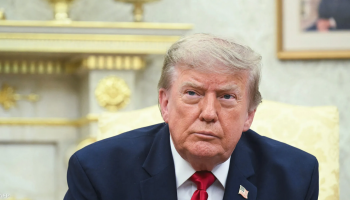
Separately, U.S. President Donald Trump said Tuesday that he no longer believed transit fees should be imposed on vessels passing through the Strait of Hormuz, reversing comments made a day earlier suggesting the United States could consider a 20 percent transit charge. Trump said he opposed the concept of such fees but argued that protecting the strategic passage should not rest disproportionately on the United States alone.
The resumption of the blockade and continued military operations are likely to heighten diplomatic and security concerns across the Gulf, as governments monitor potential impacts on regional stability, maritime commerce, and efforts to revive negotiations over Iran's nuclear program.