

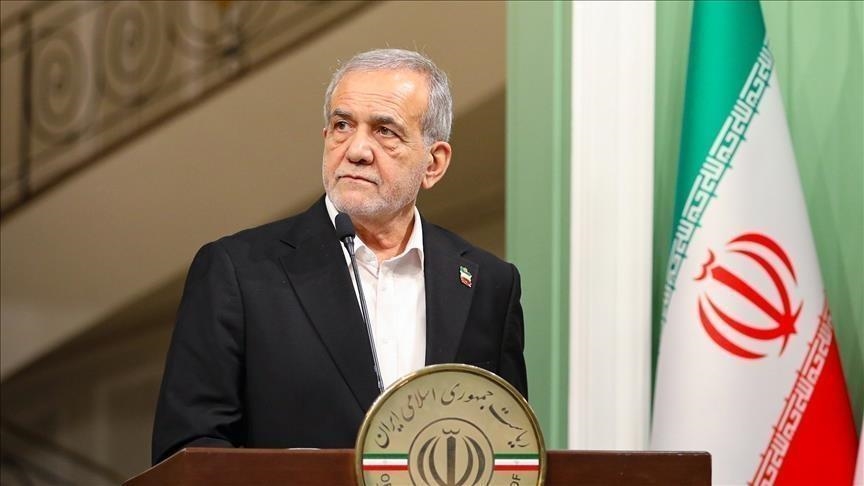
Tehran (Lamaane.net) — Iran's state-run Islamic Republic News Agency (IRNA) announced that President Masoud Pezeshkian was unharmed following reported Israeli strikes on central Tehran, including the heavily secured Pasteur district, an area that houses the presidential compound and offices linked to Supreme Leader Ayatollah Ali Khamenei.
IRNA said Saturday that Pezeshkian "is safe and does not face any problem,” a position reinforced by the semi-official Mehr and ISNA agencies. The confirmation came hours after local media reported multiple impacts in or near Pasteur, with ISNA publishing images of smoke rising from the vicinity. Iranian authorities have not released verified figures on casualties or infrastructure damage.
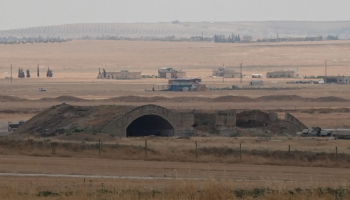
A senior Iranian official told Reuters that Khamenei was not present in the capital at the time of the strikes and had been relocated to a secure site. The Israeli military confirmed it had carried out strikes inside Iran but did not publicly specify targets.
Shortly afterward, the Israel Defense Forces stated that missile salvos had been launched from Iran toward Israeli territory. In statements carried by Agence France-Presse (AFP), the military urged civilians to remain in protected areas in line with Home Front Command directives.
AFP correspondents reported explosions in Jerusalem after air raid sirens sounded, while the Associated Press (AP) cited blasts in northern Israel as air defense systems intercepted incoming projectiles. No immediate casualties were officially confirmed.
Iranian media, quoting the Islamic Revolutionary Guard Corps, described the missile and drone launches as the "first wave” of a retaliatory operation.
Regional security experts interviewed by Lamaane News Network said the strikes near symbolic leadership sites reflect a calculated escalation designed to demonstrate reach without immediately widening the conflict.
Tehran’s swift public reassurance regarding Pezeshkian’s safety appears aimed at preventing domestic uncertainty while signaling continuity of governance. The direct exchange underscores a fragile regional balance, with further escalation likely to depend on casualty figures and the scope of any subsequent military actions.